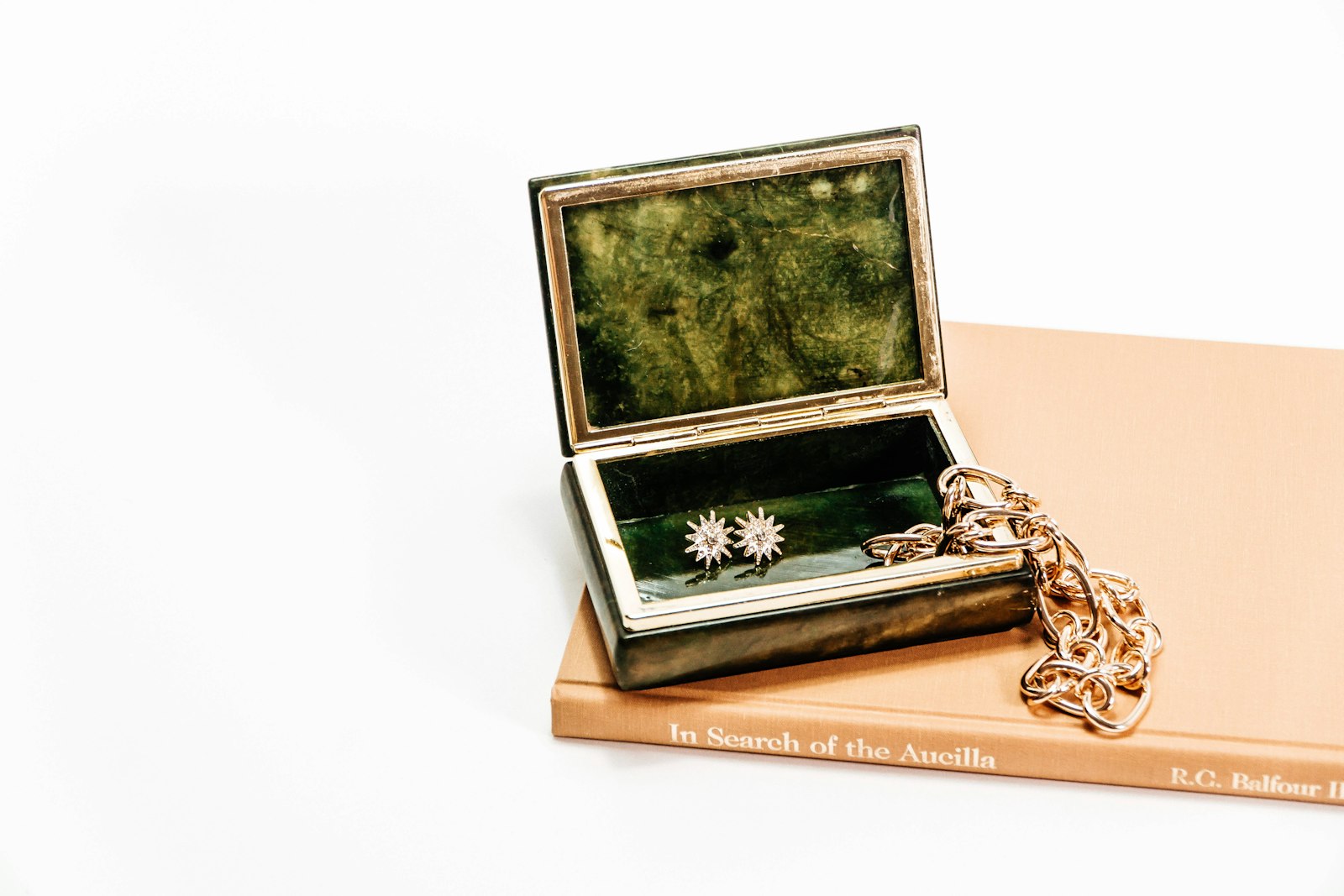
Sorting through jewellery that has been inherited is not a pleasant job, and it is easy either to sell something that should have been kept or to hang on to a box of items that are worth very little. A methodical look through helps.
Check the legal position first
If the estate is still being administered, the executor is responsible for the deceased’s property, and items should not be sold or divided until probate allows it. If several people have a claim on the estate, agree in writing what is being sold before anything goes anywhere.
Separate the three categories
Most inherited jewellery falls into one of three groups:
- Keep – anything with personal meaning. Metal value is no reason to part with a piece someone wore every day.
- Worth more intact – signed pieces, antique jewellery, gold coins, good gemstones, anything with original paperwork.
- Scrap – broken, unfashionable or damaged items with no maker’s name.
Look for makers’ marks before assuming anything
A maker’s name changes what a piece is worth completely. It is usually stamped alongside the hallmark, though it can be very small. Photograph any marks you find before you take anything in.
Gold coins are a special case
Sovereigns, half sovereigns and krugerrands are bought and sold as coins, and are normally worth more than the gold they contain. Never let coins go into a scrap lot without having them looked at as coins first.
Take your time
There is no deadline. Metal prices move, but not so quickly that a week spent checking what you have will make a meaningful difference. Melting is irreversible, so the cost of rushing is much higher than the cost of waiting.