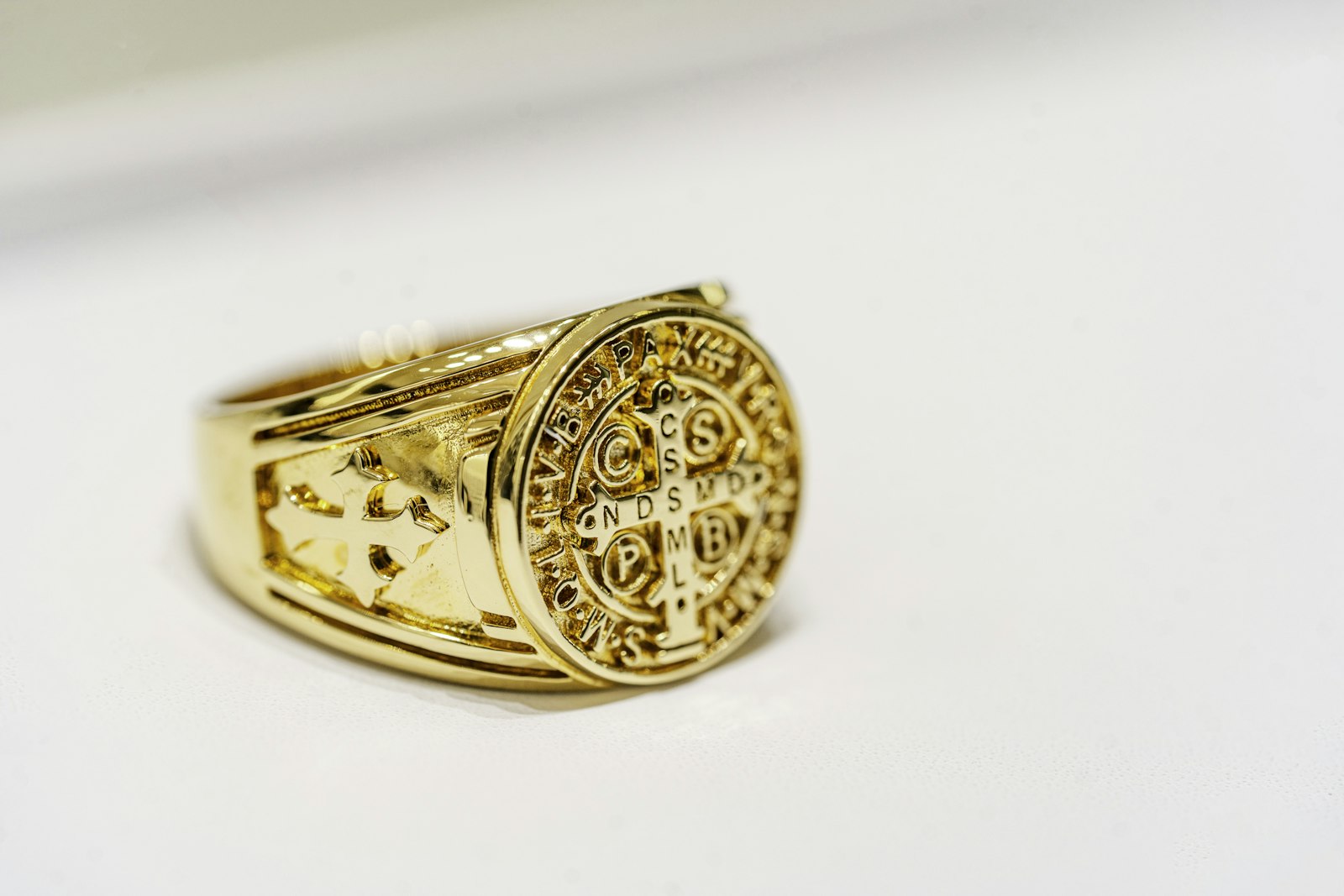
Every piece of gold jewellery sold in the UK above a certain weight must carry a hallmark. It is a legal requirement under the Hallmarking Act 1973, and it is the single most useful thing to look at before you sell anything for scrap.
Where to find the hallmark
On a ring, the hallmark is usually stamped inside the band. On a chain or bracelet it is often on the clasp or on a small tag next to it. On earrings it may be on the post or the butterfly back. The marks are small, so good light and a magnifying glass help.
What the marks mean
A full UK hallmark has three compulsory parts:
- The sponsor’s mark – the initials of the company or person who submitted the item for hallmarking.
- The fineness (purity) mark – a number showing how many parts per thousand are precious metal. For gold you will see 375, 585, 750, 916 or 999.
- The assay office mark – which office tested the item. London is a leopard’s head, Birmingham an anchor, Sheffield a rose and Edinburgh a castle.
There may also be an optional date letter showing the year of hallmarking, and a traditional fineness symbol such as a crown for gold.
Turning the fineness number into a carat
The number is the part that matters most when you are selling for scrap, because it tells you the proportion of pure gold:
- 375 = 9 carat
- 585 = 14 carat
- 750 = 18 carat
- 916 = 22 carat
- 999 = 24 carat
What if there is no hallmark?
An unmarked item is not necessarily worthless. Very old pieces, items made before hallmarking was required, and jewellery bought abroad may carry no UK mark at all. Items below the exemption weight – currently one gram for gold – do not have to be hallmarked either. In those cases the metal has to be tested to establish what it is, which any reputable buyer will do in front of you.
Be cautious with marks that look like hallmarks but are not, such as “18KGP”. The GP stands for gold plated, which means a base metal with a thin gold coating.